
Bank holiday treats and bigger baskets drive Northern Irish grocery growth

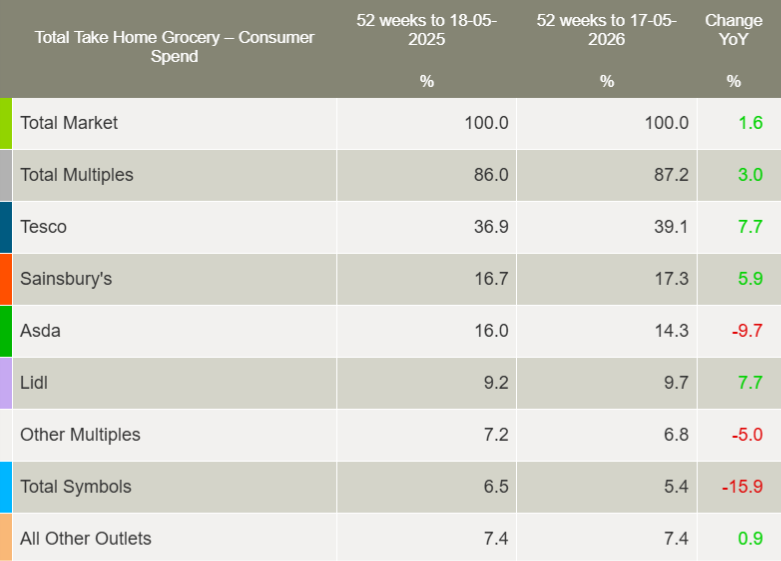
There was an increase of 1.6% in take-home grocery sales in Northern Ireland last month, compared to the same period last year, the latest figures reveal.
Shoppers leaned heavily on promotions ahead of the May bank holiday, with 70 million more packs purchased on promotion over the latest 52 weeks compared to a week ago.
According to the recent insights from Worldpanel by Numerator, inflationary pressures continued to drive shoppers towards bigger baskets, up 2.6% on the same period last year, while store visits continued to fall significantly, down 9.7%.
Like-for-like grocery prices were up by 9.6%, increasing again by 0.38 percentage points compared to the same 52-week period last year.
Branded ranges continued to dominate Northern Irish shoppers, at 56.3%, and contributed an additional £109 million in value sales compared to last year. However, own label looked to close this gap, with premium ranges growing in value by 9.2%, adding an additional £14 million in value sales to take-home grocery.
As Eimear Faughnan, Head of Retail at Worldpanel by Numerator said, shoppers still marked the bank holiday by reaching for treats and seasonal food.
“Despite the slow start to summer, shoppers weren’t holding back on the long weekend. Antipasti contributed £1.3 million in value sales growth, savoury snacks added £1.8 million, and chocolate grew by £11 million,” said Eimear.
“The long weekend meant shoppers also celebrated an extra day off, wine and spirits grew in value sales by £10.6 million and £5.5 million respectively.”
Meanwhile, Tesco leads in value share at 39.1% as the number one take home grocer in Northern Ireland. It grew ahead of the market with 7.7% value growth as new shoppers and larger baskets contributed a combined additional £130 million.
Sainsbury’s held its market share at 17.3% and grew in value by 5.9%. The retailer continued to grow by recruiting new customers and attracting shoppers into store more often, adding a combined uplift of £17.4 million to its performance.
Asda sits at 14.3% value share, declining in value by -9.7% compared to last year. New shoppers contributed an additional £10.6 million to overall performance. Meanwhile, Lidl continues to hold its 9.7% value share, up 7.7% in value growth. They attracted new shoppers and, with existing customers picking up more items per trip, delivered a combined uplift of just over £15.5 million.