
Northern Ireland grocery sales grow 1.5% as shoppers stock up for summer

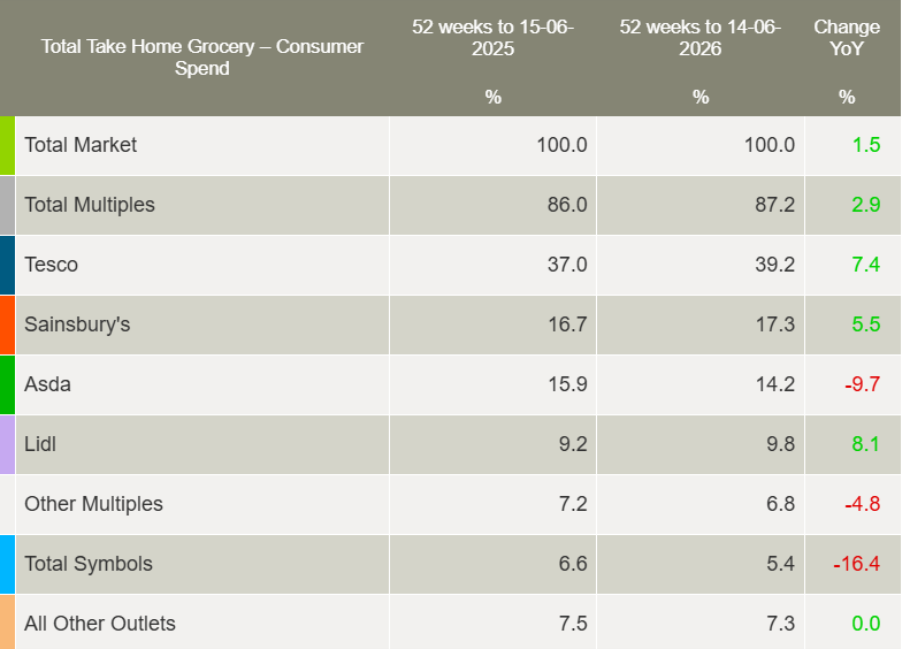
Take-home grocery sales in Northern Ireland increased by 1.5% compared to the same period last year, according to the latest data from Worldpanel by Numerator.
Shoppers are stocking up more per trip but visiting stores less often, with volume per trip up 2.7% year on year and footfall down 10.2%. Like-for-like grocery prices rose 10.38%, up 0.78 percentage points on the same 52-week period last year.
Retailers ramped up promotional activity over the period, with 31% of products sold on deal, as shoppers made the most of the second May bank holiday and the World Cup got underway.
Branded goods continued to be the standout performer, holding a 56.4% value share and contributing an additional £107 million in value sales compared to last year. Own label ranges lost ground, with value share falling 1.5 percentage points to 41.8% compared to the same period last year. Premium ranges performed ahead of the market, growing in value by 10.2%, adding an additional £15.9 million in value sales to take home grocery sales.
Commenting on the latest figures, Eimear Faughnan, Head of Retail at Worldpanel by Numerator (Ireland) said another bank holiday in May helped shoppers lean more into summer season grocery choices.
“Summer dining occasions drove demand for marinaded poultry, adding £1.46 million in the latest 12 weeks compared to last year, with antipasti adding £1.2 million and frozen savouries almost £2 million,” said Eimear.
“Other summer staples also saw a lift, with shoppers spending an extra £573,000 on suncare and £1.18 million more on carbonated soft drinks.”
Meanwhile, Tesco grew its value share to 39.2%, maintaining its position as the leading take home grocer in Northern Ireland. It grew ahead of the market with 7.4% value growth, with larger baskets being the key driver, adding £132 million to its performance.
Sainsbury’s holds its market share at 17.3% and grew in value by 5.5%. New shoppers contributed £25.9 million to its performance.
Asda’s value share stands at 14.2%, with sales declining 9.7% compared to last year. Lidl grew its value share to 9.8%, up 8.1% in value. Larger basket sizes drove an increase of £24.7 million to overall performance.